Semmelweis University is one of the most recognized medical and health science institutions in Hungary and the Central European region. Its main tasks are education, research-innovation, and patient care, which together make it outstanding not only nationally but also internationally.
Semmelweis HELP
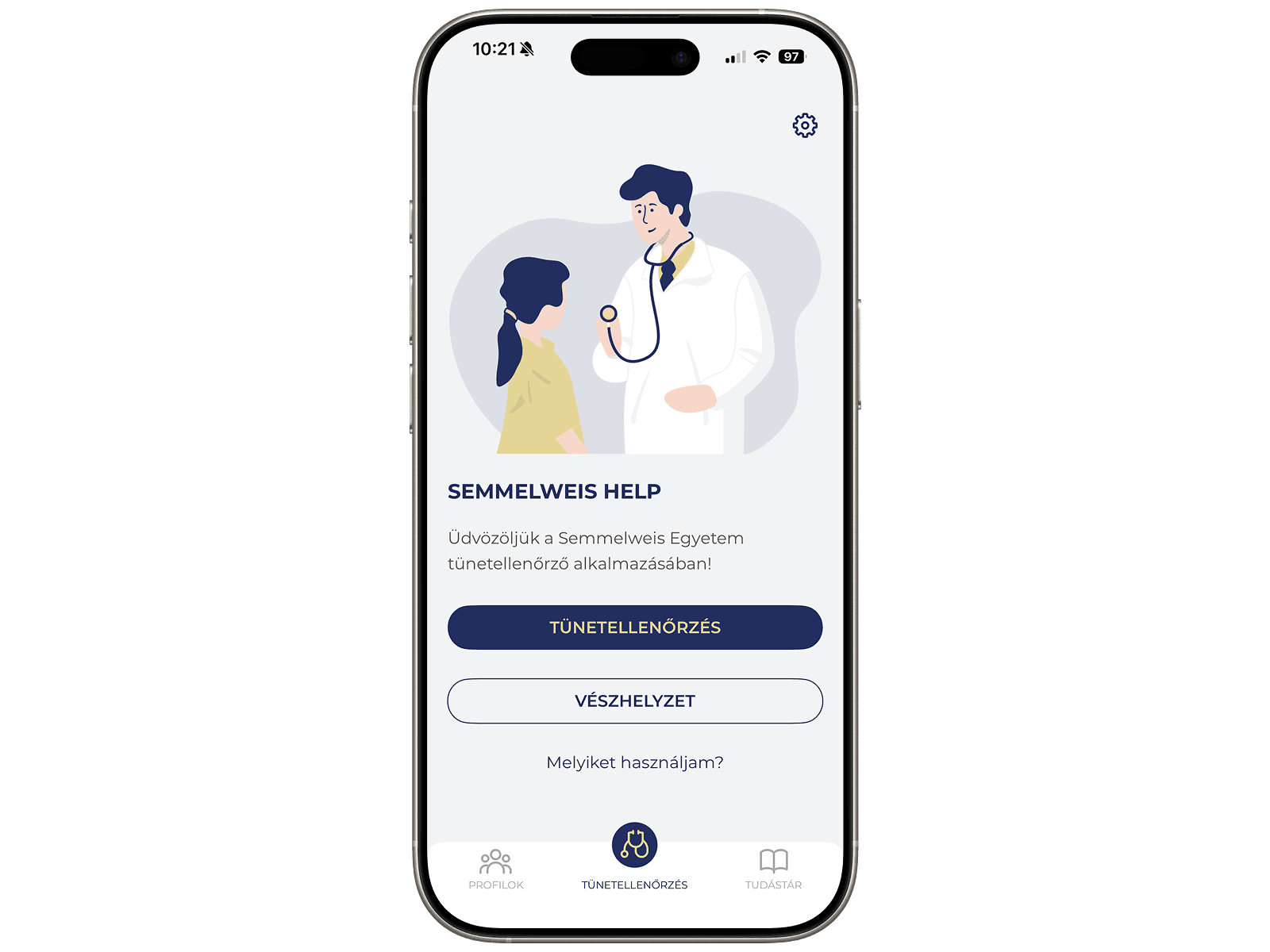
A digital symptom checker developed for Semmelweis University helps users assess possible conditions and their urgency based on medically validated data, while recommending appropriate healthcare providers—without offering a diagnosis. Available on mobile and web.
Let's start a projectServices
Client
Challenge
Back in 2021, our client set the goal of relieving the burden on the healthcare system. The idea was to develop and distribute a public application (mobile and web) that, based on medically verified information, analyzes the symptoms experienced by the user, determines the probable disease and its urgency level, and recommends the appropriate healthcare facility to visit. It was very important that users could not consider the system as providing a diagnosis!
The first phase of the project focused on children, then in the second development phase, it was expanded to include adult diseases.
At the start of the project, the use of AI was not yet widely accepted in the medical community. Thus, although it was considered at the suggestion level, the actual solution could only be implemented algorithmically. However, this resulted in the creation of a very clean and controlled medical database, which could later be used for training or validating AI systems.
Solution
First, we familiarized ourselves with the way doctors think and designed a visual “language” for them, enabling their experience and knowledge to be transformed into a form understandable for algorithms.
This was followed by designing an interface for lay users, which presented medical information in an easily understandable way and could even match colloquial expressions to symptoms.
To meet these expectations, it was essential that the design focused not only on clear visuals but also gave special emphasis to the process design of both the administrator and end-user interfaces.
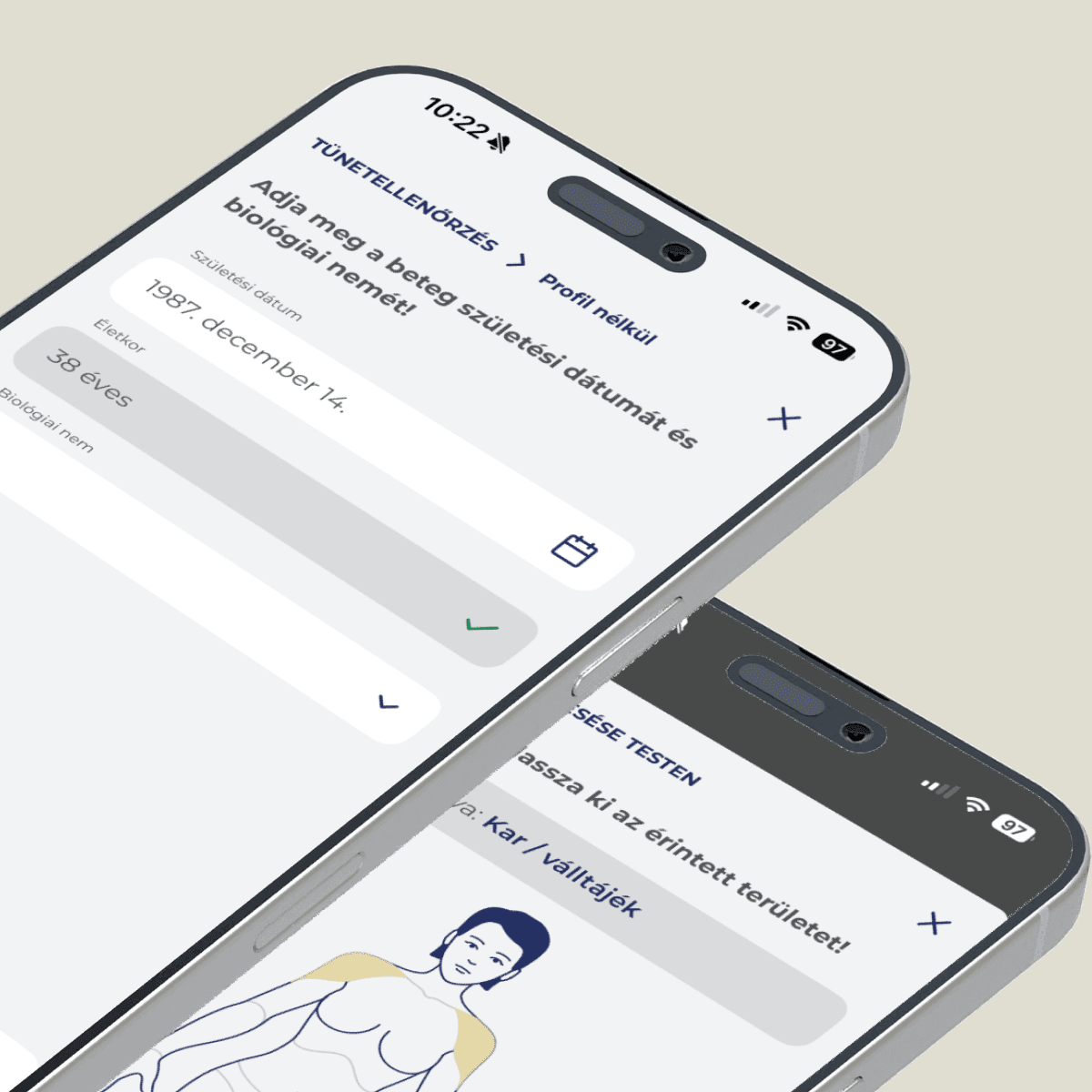
The symptom-checking process also takes into account the user's gender and age, as the same disease can have different severity and symptom relief depending on these factors.
In medical fields, maximum reliability is a basic requirement for building user trust. One condition for this is deterministic operation, even if doctors independently and continuously expand the database of symptoms and diseases.
To this end, the system includes an automated testing system, which, during the process of adding diseases, checks at several points for changes in the symptom-checking processes by running stored tests.
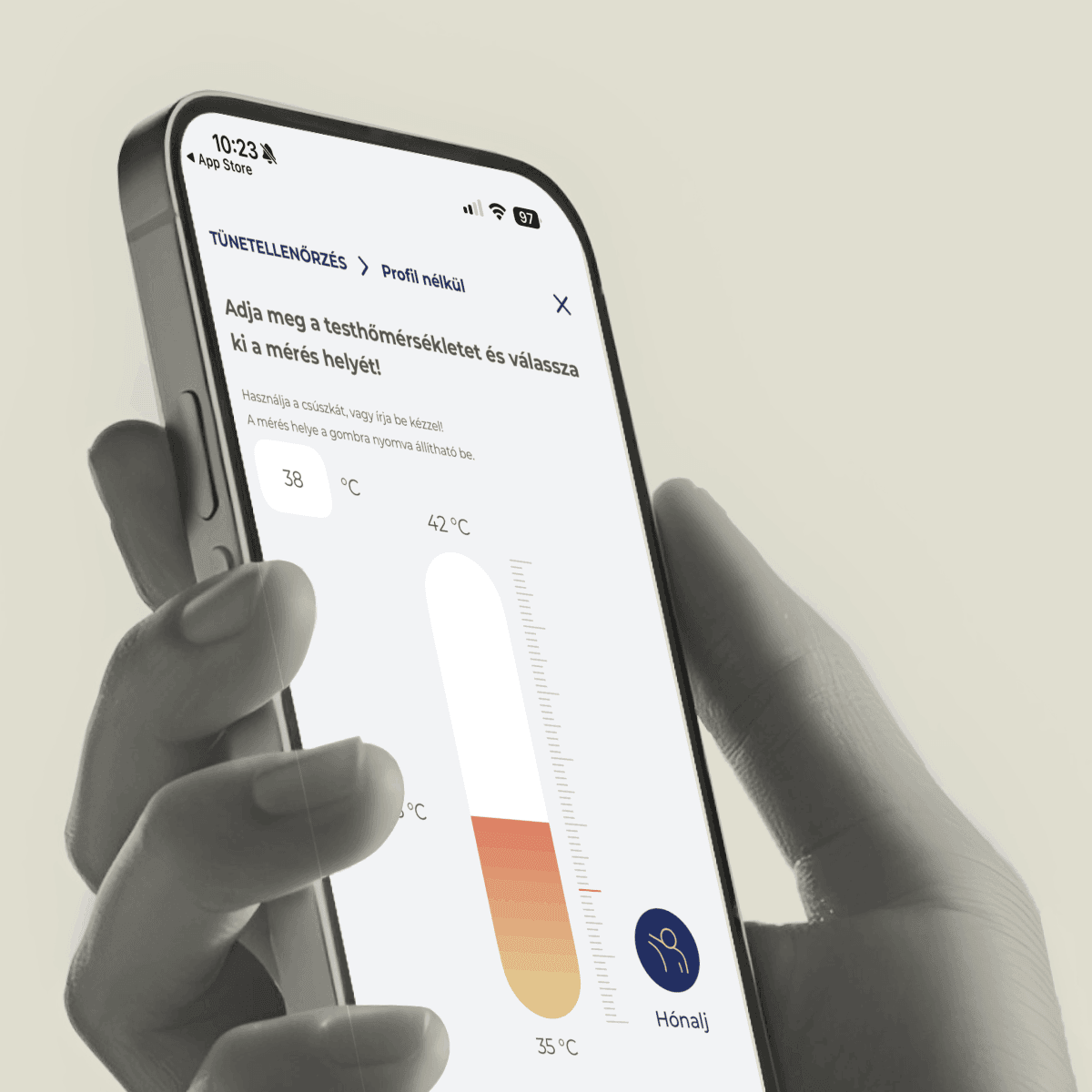
The system had to be capable of managing user profiles, taking into account compliance with data protection laws.
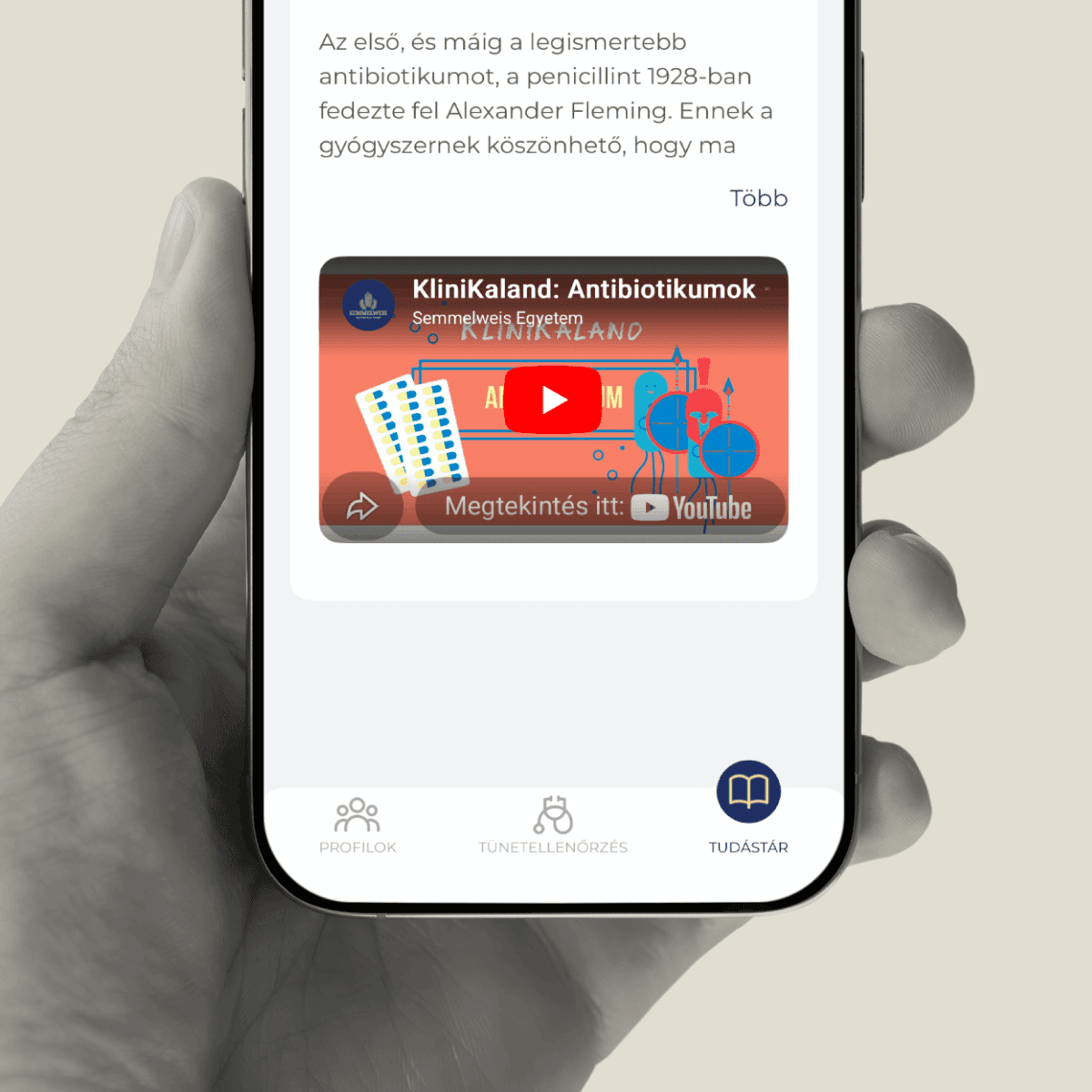
A very important goal was for the application to also serve the development of user knowledge, not just to be useful when there is a problem. Therefore, a so-called Knowledge Base was included among the features, where users can search for diseases and tasks and get information in the form of text content and videos.
Despite being a machine, the system tried to appear “caring,” as user feedback indicated this was one of the main deterrents to using such systems. For example, in the case of diseases with symptoms that change over time, the system can ask the user how they are feeling and whether they notice any changes in their symptoms. If so, the algorithm performs a new evaluation based on the changes provided.
Get in touch
Leave your contact details and we will reach out to you.